Ideas on differentiating your instruction and thinking outside of the box to reach the needs of all the learners in your classroom while building character and bringing joy along the way!
The celebration of PRIDE is one which should stretch from day to day and month to month. The legacy of those who came before are important to remember and pass down to our young ones. As a parent, an educator and an ally for the LGBT2QIA+ community, I want to make sure kids are not only seeing themselves in literature, but are exposed to different types of *everything* and love others regardless. Moreover, creating and showing our kiddos a world filled with love, all types of love, is an action to build more empathetic, compassionate, and thoughtful members occupying our Humanity today and tomorrow. In the community around us, and in texts we can show our children not only the importance of acceptance but to boldly be who their are. They don't have to be silent, invisible, shrink, or hide from their truth.
In no particular order, here are my current favorite recommendations: *note, some pictures may appear more than once because...technology*
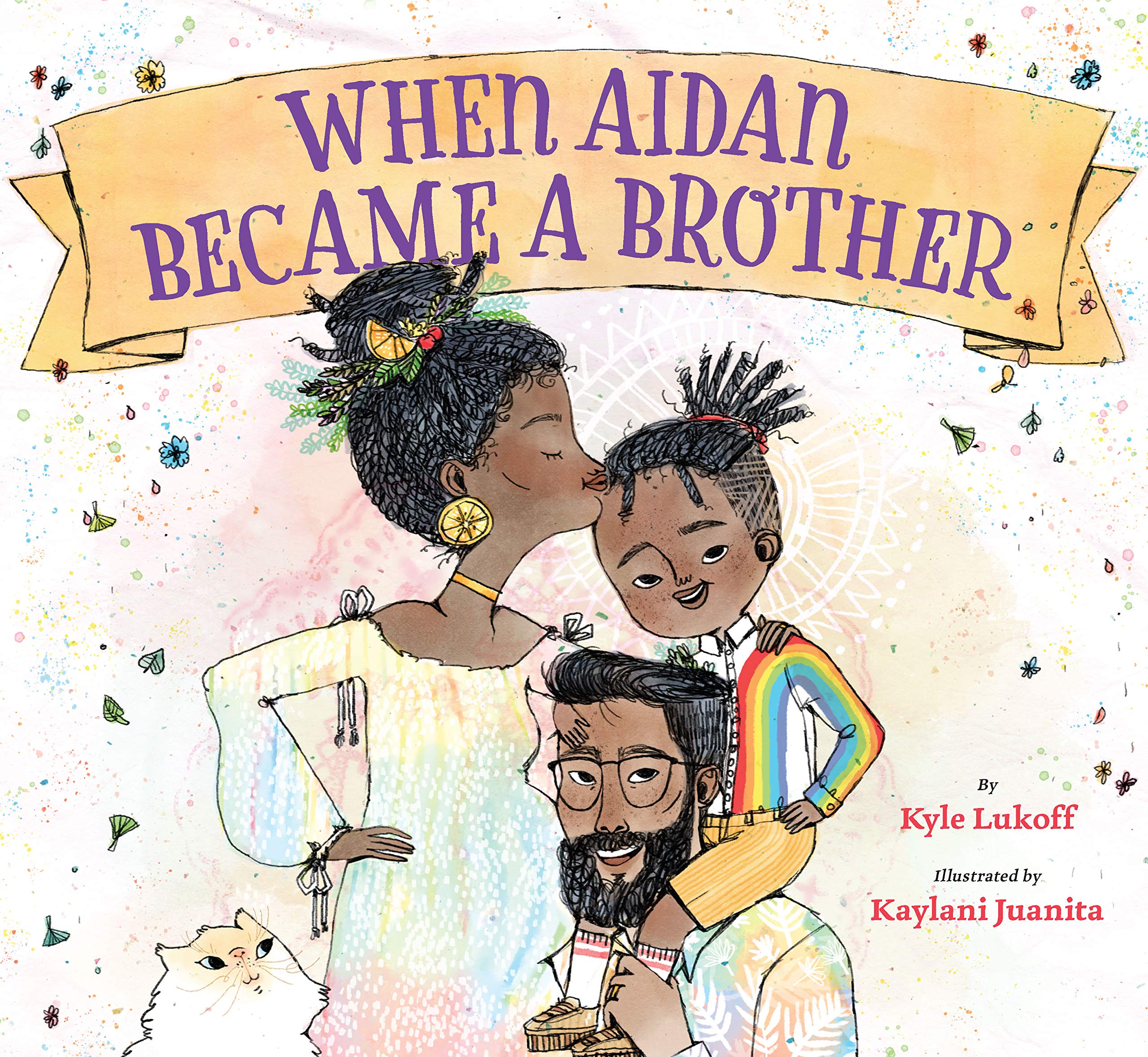
This story is oh-so-beautiful! It's also lovely to find a book with a main character of color and an LGBT2QIA+ book at that. The story centers around Aidan, a transgender kid, who is preparing for his new sibling to arrive and he wants to get everything "just right." Part of the mission to get everything just right is because when Aidan was a baby, everyone thought he was a girl or at least a different kind of girl. Aidan wants to make sure his new sibling feels understood right away. Explore this book to discover how during Aidan's journey preparing for the new baby he learns the most important lesson of being a big brother. ❤️
The message in this story is absolutely heart-melting! A story about a child named Miu Lan who creatively can be whoever they imagine. However, the kids at school are not so accepting. Miu Lan's mother offers these loving words of comfort, "whatever you dream of, I believe you can be, from the stars in the sky to the fish in the sea." A story about love. A story about identity. A story about acceptance regardless of differences. A must read! 💛
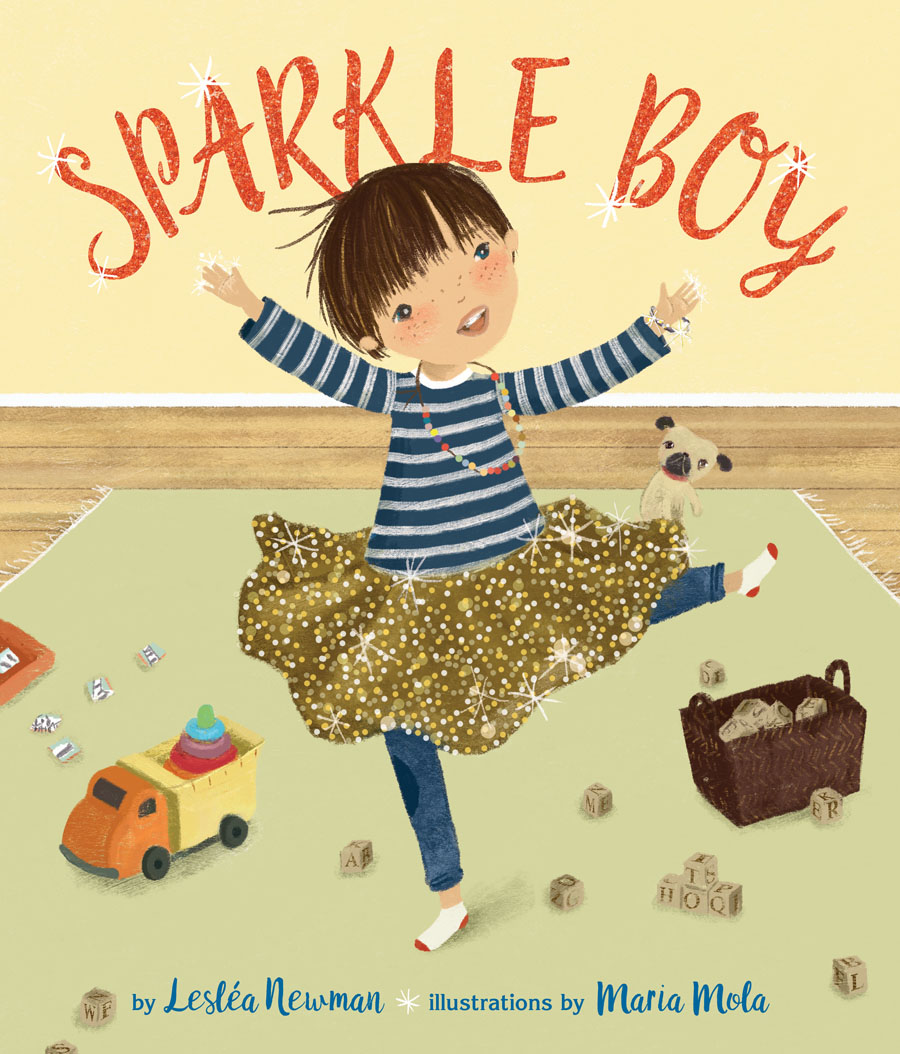
A captivating and inspiring story about Casey who loves blocks, puzzles, and dump trucks but also everything that sparkles! Even though the adults in Casey's life are understanding, Casey's sister isn't so convinced. "Sparkle Boy" examines the celebration and respect of all types of gender expressions. A deliciously heartfelt read! 💚
I love that this book brings up all of the usual stereotypes and then...crushes them. Sure, girls like ballet and boys like football...except when they don't. This book does a lovely job of encouraging children to like what they like regardless of what society tells them they should like or how they should play. 💙
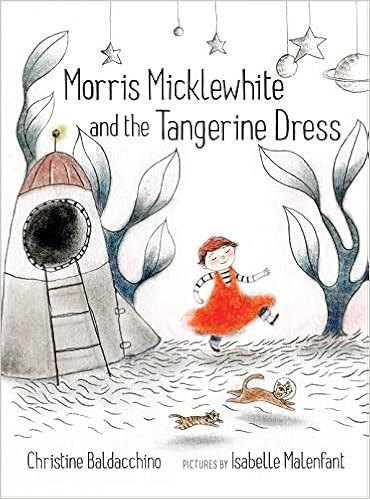
Vibrant, sweet and almost ethereal illustrations! The tangerine color throughout powerfully stands out in all of the beautiful ways. Dear Morris loves to live his life and embrace all the things that give him joy. Maybe it's the apple juice at snack time or singing the loudest at circle time. Or maybe it's wearing a tangerine dress and putting on shoes which go "click click click." Morris is thus teased at school for defying alleged gender norms and stereotypes. The kids at school just don't get it. All of this meanness makes Morris' tummy ache. Check out this book to see how Morris goes through his vulnerability and comes out triumphant on the other side. 💜
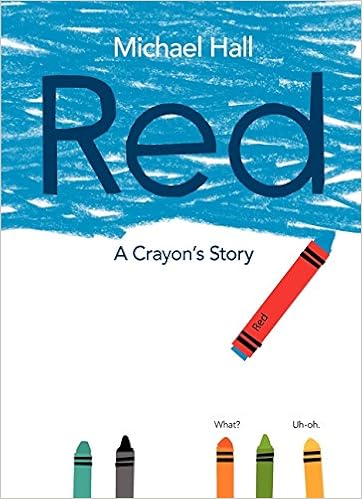
A gorgeous story about a blue crayon labeled as "red." An important narrative for children to hear about persevering to be yourself no matter what others have to say (and finding your allies along the way)!
Bonus! Also available in Spanish! ❤️
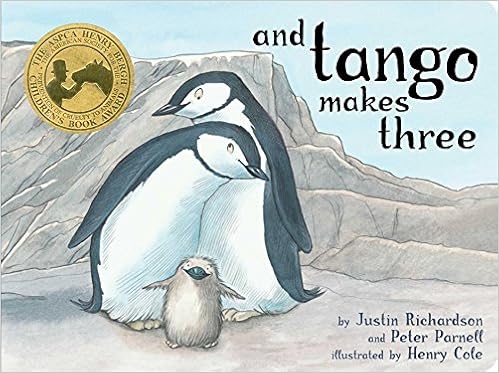
I love, love, love this book. It's not a new story, but I couldn't NOT put it on this list. I also love that we can regularly go visit these sweet, sweet penguins in our hometown of NYC at the Central Park Zoo. I highly enjoy sharing this heartwarming story with my daughter each time we go. "And Tango Makes Three" is the true story based on two male penguins, Roy and Silo, who fostered and successfully hatched a motherless egg. The joy this story brings while celebrating the love of this same-sex family is one that won't soon be forgotten. 💛
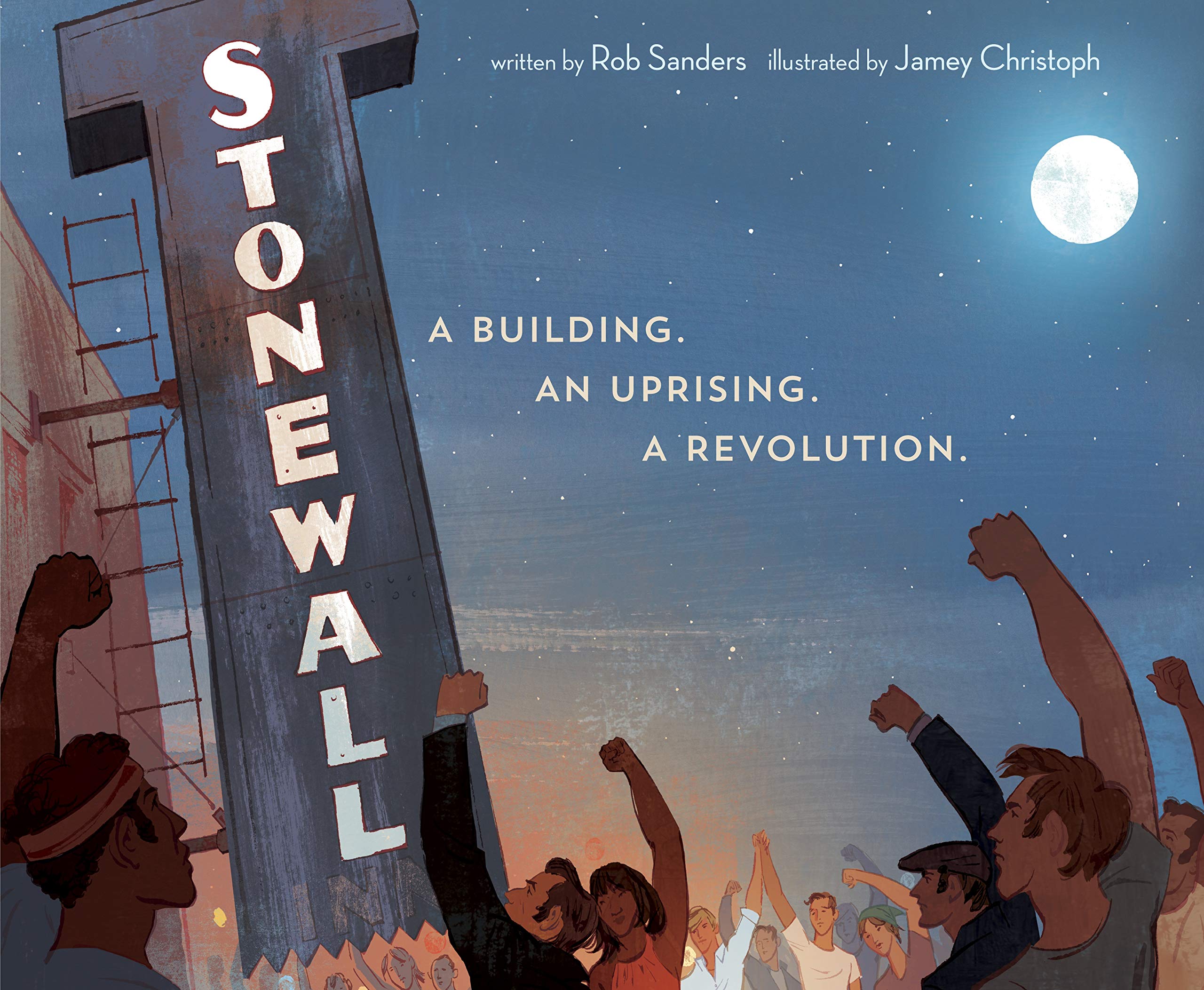
What I love about this book is that it is told from the perspective of Stonewall, the building. With Stonewall as the main character it makes it very child-friendly and gives a sweet and nurturing feel to the overall book. Even though it is more history based that story based, the narrative is not only accessible but also an important one for children of all ages to know. 💚
This book jumps right into Jamie playing with all sorts of different toys and different children at Jamie's new preschool. Each child is mesmerized at Jamie's skills to not only care for a baby doll, dance ballet but also to fix cars and fight villains. The kids all want to know, is Jamie a boy or a girl. Best response ever, "I'm Jamie!" The next day sees each child following Jamie's example and playing with the toys they want to play defying the stereotypes that boys and girls should only like and play with certain objects.
Bonus! This book comes with a section for caregivers and teachers on playtime = learning time tips! 💙
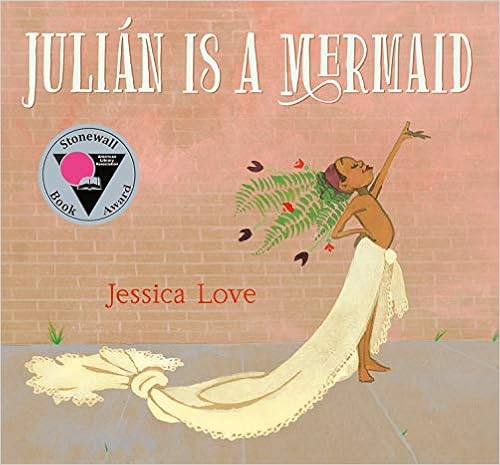
The illustrations in this book are stunning and breathtaking. Everything about this book just gives me warm feelings. The narrative is very gentle and no part of Julián's love of mermaids is made a big deal of. It's just who Julián is. The relationship between Julián and his Abuela will give you all the feels. 💜
Our children and students need continued outlets to help them process their emotions, feelings and give voice to them. Crafted learning helps expand emotional intelligence and vocabulary. We're continuing to build empathetic, compassionate, and thoughtful members of society!
Strongly agreed with the article-we should include social and emotional learning in all levels of schooling!
Here is a beautiful short film "Just Breathe" by filmmakers Julie Bayer Salzman and Josh Salzman examining what our emotions feel like and how it affects us.
For many of my students I find when they are under high stress or become easily frustrated then can quickly go to negative talk or enraged emotions. I find positive talk so helpful to give them a new narrative to tell themselves. "Yes, I CAN do it! Let me try again!"
This film gives another strategy to "just breathe." One we can use at any age!
I work with many of my young students around building their eye-hand coordination and strengthening the muscles and dexterity in their fingers. Even with some of my older students who are having writing challenges I find it important to keep the frustration level low by keeping the fine motor skill building as fun as possible!
Great activities:
Cutting
Drawing
Tracing
Sorting beads and buttons
Using play tweezers to pick up objects
Connect the dots activities
Buttoning and zipping up objects on clothing
Paint with fingers or Q-Tips
My favorite tools/resources:
Yarn (sticky or regular)
Macaroni
Play Doh
Beads and Buttons
Wikki Sticks
Pipe Cleaners
Finger paint
For older students:
Tennis Balls (to roll in hand, on table, or along leg)
Modeling Clay
Practice "tripod fingers" and rolling clay into small balls
Chopsticks
Silly Putty
Squeeze Balls
Legos
Origami
Games like Jenga or Operation
Musical Instruments
Hair Braiding
It's also important to take rest/wiggle breaks with the fingers and to even roll the pencil with the palm of their hands before picking it up to start writing again
Reading a picture book aloud from her armchair, 20 children gathered on the rug at her feet, kindergarten teacher Jamie Landahl is carrying on a practice that's been a cornerstone of early-literacy instruction for decades. But if you listen closely, you'll see that this is not the read-aloud of your childhood. Something new and very different is going on here.
What's happening in Ms. Landahl's classroom at Ruby Duncan Elementary School reflects a major shift in reading instruction brought about by the Common Core State Standards. In place in more than 40 states, the standards expect children to read text carefully and be able to cite evidence from it to back up their interpretations. That approach requires teachers to pose "text-dependent" questions—those that can be answered only with a detailed understanding of the material, rather than from students' own experience. And it's not just for complex high school books; it's increasingly being used in reading stories aloud to young children.
Ms. Landahl's lesson on a recent afternoon showed the strategy in action. As she turned the pages of Patricia Polacco's Thunder Cake, she didn't ask her students to share their feelings or experiences. Instead, she posed a series of questions that gently guided the class back to the story for answers.
The book recounts how the author's grandmother taught her to manage her fear of thunderstorms by learning to tell how far away they were and hurrying to bake a cake before the rain began.
The teacher asked a cluster of questions aimed at helping the children understand that the author is also the narrator. "I wonder who's telling this story? Turn and talk to your buddy," she said.
And then: "Oh, so the character is also the author?"
When the narrator described the "sharp crackling light" that frightened her, Ms. Landahl said: "What is she scared of?"
Hands shot up. "Thunder!" some children called out.
"Well, that's the sound," Ms. Landahl replied. "She can see the light, right?"
There was a momentary pause, and then a girl said: "It's lightning."
Ms. Landahl embedded vocabulary instruction into the lesson, too. When the story said that Grandma took a deep breath as she watched the horizon, Ms. Landahl put on a confused face and said: "Hmmm. What do you think 'horizon' means?"
The pupils took several passes at a definition, but struggled. Ms. Landahl pointed to the place in the picture where the sky meets the land. Continuing, she asked: "Why did Grandma take a deep breath when she looked at the horizon?"
"Maybe she was thinking about something," one boy volunteered.
"Or maybe she was trying to calm down," a girl next to him said.
"She was thinking what will she do, because the storm is coming," said another girl.
Teacher-Written Lessons
In that way, the children made their way through the book, piecing together its meaning. Then Ms. Landahl read the story again, and they acted out the parts in the book. Some children jumped up and roared when thunder appeared, and others stood up and shook little paper lightning bolts. Others played the protagonist, counting aloud the seconds between the lightning and the thunder, as the book shows her grandmother teaching her to do.
The Thunder Cake lesson is one of 82 that have been written collaboratively by more than 300 teachers across the country and stored online as part of a collective effort called the Read-Aloud Project. The Washington-based Council of the Great City Schools, which represents large urban districts, and Student Achievement Partners, in New York City, which supports common-core implementation, launched the project in 2013 to build a warehouse of free common-core-aligned lessons that teachers can use as is, or modify to fit their students' needs.
Kindergartners take part in a read-aloud session led by their teacher, Jamie Landahl, at Ruby Duncan Elementary School in North Las Vegas.
—Tiffany Brown Anderson/Redux for Education Week
The 318,000-student Clark County school district has waded deep into the work, using the Read-Aloud Project in all 218 of its elementary schools this year. A good chunk of the $7.5 million it spent on elementary-level books was for the texts that Read-Aloud Project lessons are built around, said Wendy Roselinsky, the district's director of K-12 literacy and language development. District leaders see the Read-Aloud Project—dubbed "RAP"—as a key strategy in improving literacy skills in a student population that often struggles with reading.
Focus on Content
Lindsay Tomlinson, the assistant principal at Ruby Duncan Elementary, which enrolls 685 children, helped bring RAP to Clark County after participating in its early development. She's a big fan of the text-dependent-question technique. Keeping the children's focus on the content of the book helps ensure that they understand the story and that they build vocabulary and content knowledge, before they move on to discussing their feelings or personal experiences, she said.
The intense content focus also helps all children access the story equally, regardless of their individual life experiences, said Katrina Martinez, the instructional coach for the district region that includes Ruby Duncan.
"There's a fine balance between when to ask questions that help children connect personally with the story and when to ask questions that help them understand the content," she said. "In classes like ours, asking 'Who's been to the ocean?' might reach only a couple of our kids. We're in the middle of a desert."
The books chosen for the read-alouds occupy a distinct niche in overall class text selection, Ms. Tomlinson said. Teachers tend to choose on-grade-level books for whole-group instruction and books at each student's instructional level for individual reading, she said. But since children can understand oral language before written language, teachers try to use read-aloud books that are two to three grade levels above their students' assigned grade to help them develop higher-level skills with teacher support, she said.
Reading aloud to children has a long history as a powerful classroom technique to build foundational literacy skills. It exposes children to different kinds of text structures and language, builds awareness of how sounds are connected to words, and demonstrates phrasing and fluency. Most importantly, in the eyes of many educators, it can foster a loving—and they hope lifetime—relationship with reading.
Increasingly, K-2 teachers are using new questioning techniques as they read aloud to their students. They’re designed to focus children on the meaning of the text, rather than their personal reactions to it. Register now.
Some experts worry, however, that an approach like RAP's can undermine the joy of the read-aloud.
"We have to be very careful that we don't turn them off more than we turn them on," said Jim Trelease, the author ofThe Read-Aloud Handbook. It's important to prepare children for a challenging book by acquainting them with its new vocabulary, he said. But "breaking up the story constantly with, 'Let's talk about this,' and 'What about that?,' Well, gee, how about the plot? All that stopping and starting can become an impediment."
Finding a Balance
Susan B. Neuman, the chairwoman of the department of teaching and learning at New York University's Steinhardt School of Education, praised the Read-Aloud Project's emphasis on helping children understand the content of the story. The trick, she said, is ensuring the right balance between reading for the sheer joy of it and delving into specifics for vocabulary and content mastery.
"Too many of our poor readers don't focus enough on the text itself, and that's a problem," she said. "They really need that rich content development. But some teachers can tilt too much toward obsessing about specific words without the larger picture, the sound, the feel of the book that's being read. If it's not done right, it can look too exercisey and can get excruciatingly boring."
To guard against that, the Read-Aloud Project approach reserves the first reading of a book for pleasure. Deeper dives are reserved for the second and third readings of a story. Each lesson envisions three or more readings of a book, each with a distinct focus, over several days. Children have the opportunity to make personal connections with the story early on, and again in the classroom activities built around the story.
After the second reading of Thunder Cake, the children in Ms. Landahl's class filled out worksheets with graphic organizers shaped like thunderclouds to help them get ready to write about the story. They listed things that scare them, like thunderstorms, and talked about their experiences with big rainstorms. "I saw a storm one time that was so big it flooded a whole road," one boy told Ms. Landahl.
Like many schools across the country, Ruby Duncan, above, is using new questioning techniques to help children learn to draw evidence from what they read. The strategy is called for in the Common Core State Standards, now adopted by more than 40 states.
—Tiffany Brown Anderson/Redux for Education Week
Building Background Knowledge
In another wing of the school on the same day, 2nd grade teacher Nikki Longmore was using a RAP lesson to read aloud a nonfiction book: 14 Cows for America, which recounts how a Maasai tribe in Kenya sent cows to the United States as a gift of comfort after the Sept. 11 attacks.
On the second reading of the book, she stopped to ask the children to point out things in the story that showed the compassion of that gift: the Maasai's deep reverence for cows, and the pain of 9/11, conveyed to them by a native son who had returned to his village from his medical studies in New York.
Ms. Longmore and her colleagues chose to customize that lesson. As written for RAP, it focused on themes of past and present, since the story flips back and forth between the two, a structure that can prove challenging for young students. But the 2nd grade team wanted to use the story to build students' background knowledge of 9/11 also, so they chose to focus more discussion on that and paired it with another book: Sept. 12th: We Knew Everything Would Be All Right. That book was written and illustrated by 1st graders at a Missouri school who were upset by the plane crashes, but found reassurance and security in the recurring events of their days, such as their teacher reading to them at school.
During the read-aloud of 14 Cows for America, Ms. Longmore's 2nd graders were absorbing the messages of the Maasai's gift and the tragedy of 9/11. The teacher asked the children to "turn and talk" with one another about a phrase in the story: The villager who told his tribesmen about 9/11 said that it "burned a hole in his heart."
"What is the author trying to tell us?" Ms. Longmore asked the children.
"That it made him sad," a boy said.
"Can you provide some more support for your answer from what you've read?" the teacher asked.
RELATED BLOG
"Because the author told us that many people lost their lives," a girl said.
Ms. Tomlinson, the assistant principal, said that kind of focus on a story's meaning leads her students more often to deeper understanding.
"Listening to what they say in class," she said, "it's proof that they can reach those higher levels, with scaffolding, and they can get it."








 Printer-Friendly
 Email Article
 Reprints
 Comments


 Increasingly, K-2 teachers are using new questioning techniques as they read aloud to their students. They’re designed to focus children on the meaning of the text, rather than their personal reactions to it.


